

Finance, Accounting, Banking, Insurance & Compliance
Diploma in International Financial Reporting (DipIFR) Preparation
Bilingual ACCA DipIFR preparation with original IFRS cases and simple consolidation workings.
Free
Specialist Preparation Program in Accounting for Business is a free program on ARPS, the Arab Platform for Professional Studies. Practice turning business transactions into traceable records and statements, then interpret results and prepare a bounded accounting recommendation. The program starts with source evidence and double entries, then builds adjustments, reconciliations and a close.

Optional certificate fee 50% launch discount
$90 instead of $180
331 AED or 338 SAR
The program starts with source evidence and double entries, then builds adjustments, reconciliations and a close. It covers revenue contracts, inventory and operating assets using stated IFRS examples, followed by statements, cash flows, ratios, cost decisions and cash planning. The final workpaper and memo separate established facts from matters needing approval. All cases and figures are fictional learning examples; actual practice follows the entity policy and applicable jurisdiction.
Lessons provide worked entries, reconciliations, cost and cash schedules, with correction cases and conditional decisions using the supplied facts.
A calculation can balance while its account or period is wrong. Learn to test evidence, assumptions and postings before relying on a trial balance or single ratio.
Useful for practitioners who prepare preliminary records and reports and bring differences to an authorised accountant or manager. Completion does not grant a professional licence, audit authority or approval power.
From document to accounting effect; Credit purchases, sales and settlement; Posting and trial balance.
Period-end adjustments; Bank and receivables reconciliation; Adjusted trial balance and closing.
Revenue in a multi-promise contract; Inventory cost and net realisable value; Equipment cost, depreciation and disposal.
Assemble and cross-check statements; From profit to cash flow; Margins and liquidity with context.
Contribution, break-even and capacity; Cash budget and payment timing; Separate price and volume effects.
An evidence-linked month-end workpaper; Investigate conflicting cash and stock figures; A bounded accounting recommendation.
Subjects unlock in sequence as you progress.
Selected concepts draw on official IFRS pages and OpenStax educational material. Cases and calculations were authored for this program, not presented as research results or universal accounting rulings.
Entries, reconciliations and interpretation are linked to primary sources and stated case facts.
Assessments follow the program blueprint and may use module assessments, a final assessment, or a combination, under the approved attempt policy.
Assessment attempts: 2 per assessment, 7 days apart
The pass mark is announced before the program is published.
The credential confirms completion and successful assessment; it does not represent professional licensure unless explicitly and lawfully stated.
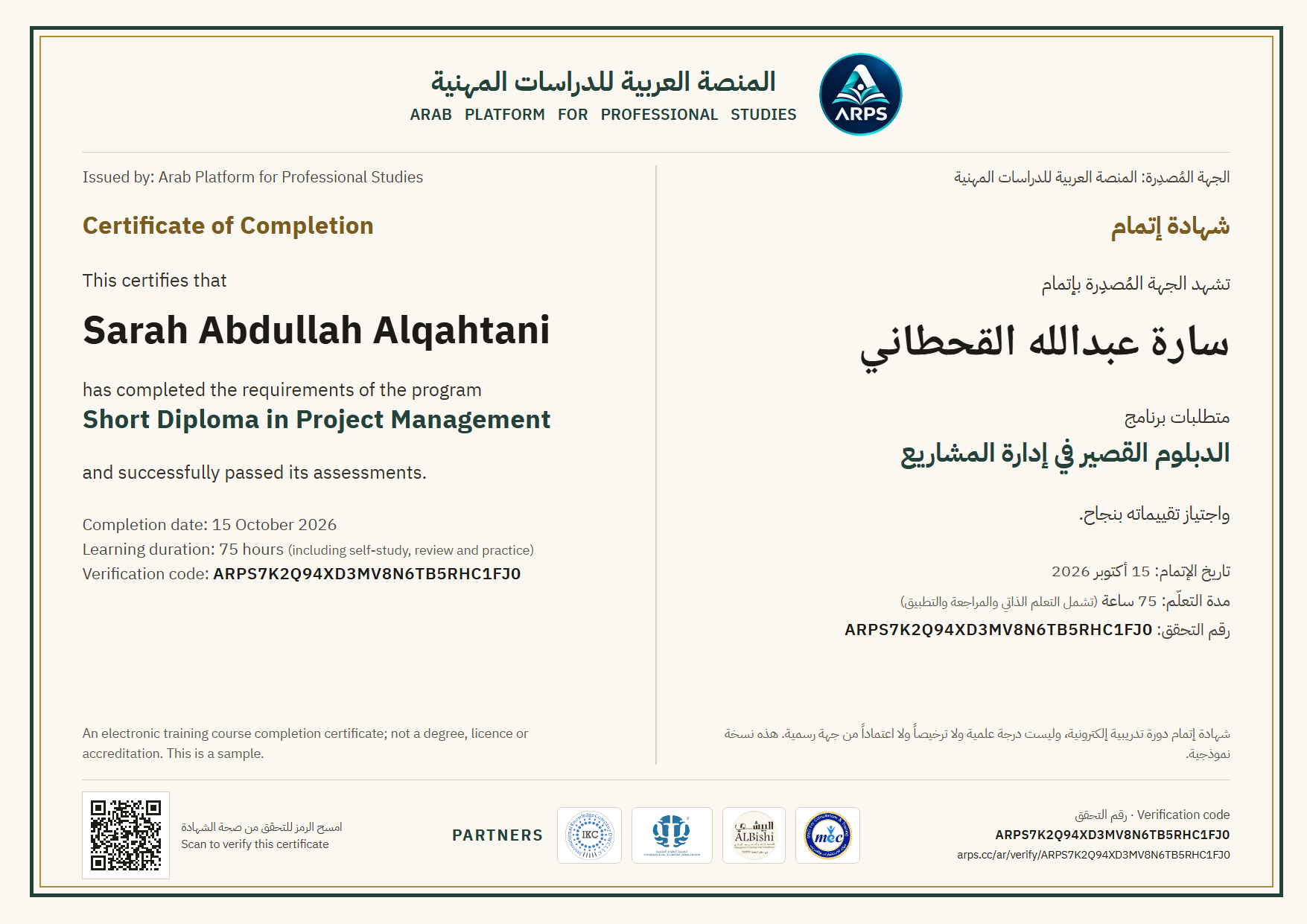
Every certificate has a public verification code. Verify a certificate
The real design with fictional details; opens in a new window.
No. Examples are country neutral and omit tax returns and local legal requirements. Check the policy and standards applicable at work.
The program teaches a workpaper, checks and a recommendation within delegated authority. Statement approval and professional opinions belong to authorised roles.
No. Fictional cases provide the figures and evidence. Do not enter sensitive work data into an external tool without permission.
They test decisions and calculations from stated facts, alongside self-practice and a module assessment. They are not an independent field competency test.
Profit follows recognition of period revenue and expense, while cash follows receipt and payment timing. The lessons build a bridge between them.
Attempt and retry rules follow the platform’s shared assessment policy. This content does not set an individual passing score or exception.
Yes. Specialist Preparation Program in Accounting for Business is free on ARPS: every lesson, exercise and assessment is free, the first subject is open to read without an account, and the program is available in Arabic and English. Issuing a certificate is optional; it is a training completion certificate showing you passed the program's assessments, not a university degree, a professional licence or an endorsement by an external body.
The subject of this program is also known as: business accounting, financial accounting, accounting basics, bookkeeping and accounting. Learners usually find it by searching for: free accounting course, learn accounting online for beginners, journal entries and bookkeeping, how to prepare financial statements, accounting course with completion certificate.
Programs from the same field or route that may complement what you learn here.
Finance, Accounting, Banking, Insurance & Compliance
Bilingual ACCA DipIFR preparation with original IFRS cases and simple consolidation workings.

Finance, Accounting, Banking, Insurance & Compliance
A foundational, applied diploma explaining how everyday business transactions become journal entries, balances and financial statements that support understanding of performance, cash and financial position. It moves from the accounting equation and double entry to accruals, statements, cash flows, controls and bank reconciliation.

Finance, Accounting, Banking, Insurance & Compliance
Practise reviewable compliance and financial crime case work, from source authority and customer due diligence to transaction analysis, testable controls and confidential referral within a specialist role.
Finance, Accounting, Banking, Insurance & Compliance
Build a traceable analysis of financial statements: align data, reconcile profit and cash, assess liquidity and debt, and communicate bounded, evidence-backed judgment.