

Data, AI, Digital, IT & Cybersecurity
Professional Mini-Master in Enterprise Data Strategy and Governance
Develop professional judgment for a measurable enterprise data strategy and governance that operates in practice.
Free
Short Diploma in Data Governance and Quality is a free program on ARPS, the Arab Platform for Professional Studies. A foundational short diploma linking decision rights and data definitions to quality measurement, defect repair and consumer communication. Learn through fictional cases, calculations and interpretation exercises, then complete a summative assessment in each of five connected subjects.
Important notice: Independent education and completion certificate; not a university degree, professional licence or endorsement by cited bodies.

Optional certificate fee 50% launch discount
$100 instead of $200
368 AED or 375 SAR
Organizations produce many figures, but a number is not fit for a decision merely because it appears on a dashboard. Begin by asking who defines an element and who may accept its risk. Build a glossary and lineage record that expose the meaning and sources of fields. Measure completeness, validity and consistency with explicit denominators and windows. Investigate defects across source, transformation and display, and plan repair with change and rollback evidence. Finish by running a stewardship meeting, a decision dashboard, an honest quality statement and a measurable thirty-day improvement cycle. Cities, organizations and applied numbers in the lessons are teaching fiction, not descriptions of real services. This is a foundational completion diploma, not a professional accreditation, license or legal authority. Real decisions remain subject to the policies and permissions of the learner's organization.
Use the outputs with a fictional appointment, order or loan table: a metric card with numerator and denominator, a layered evidence issue record, a meeting decision with owner and deadline, and a consumer notice saying what can be used now. The course requires neither a commercial tool nor access to real production data.
Two teams may agree on a field name yet disagree about its meaning or which population enters a report. The program connects charter, definition and test to issue and decision so version mismatches can be exposed before they mislead action. Learners practice saying when impact is unverified instead of announcing unsupported success.
Operations analysts, beginning data stewards, service managers and report consumers can use these methods to document definitions, question measures and route quality issues to the right decision owner. Such skills are relevant across teams but carry no promise of employment, promotion or satisfaction of a professional credential requirement.
This subject grounds governance in a specific service decision.
This subject moves from a field label to a meaning that can be tested and recalculated.
This subject turns quality from a general label into tests linked to use.
Defect resolution begins by stating what was observed, where and when, then investigating cause rather than putting a guess in the ticket title.
The final subject puts the diploma’s tools into an operating cadence.
Subjects unlock in sequence as you progress.
The course draws on the UK Government's data-quality and issues guidance, EDM Council's public DCAM overview, and W3C's DQV and DCAT 3 documents within their publicly inspected scope. DQV is a Working Group Note, and the accessible DCAM page is an overview rather than its detailed framework. Cases and exercises are original teaching fiction; current review is self-review, not accreditation or learner psychometric testing.
Fictional case and exercise instruction with author self-review; no accreditation or independent learner trial.
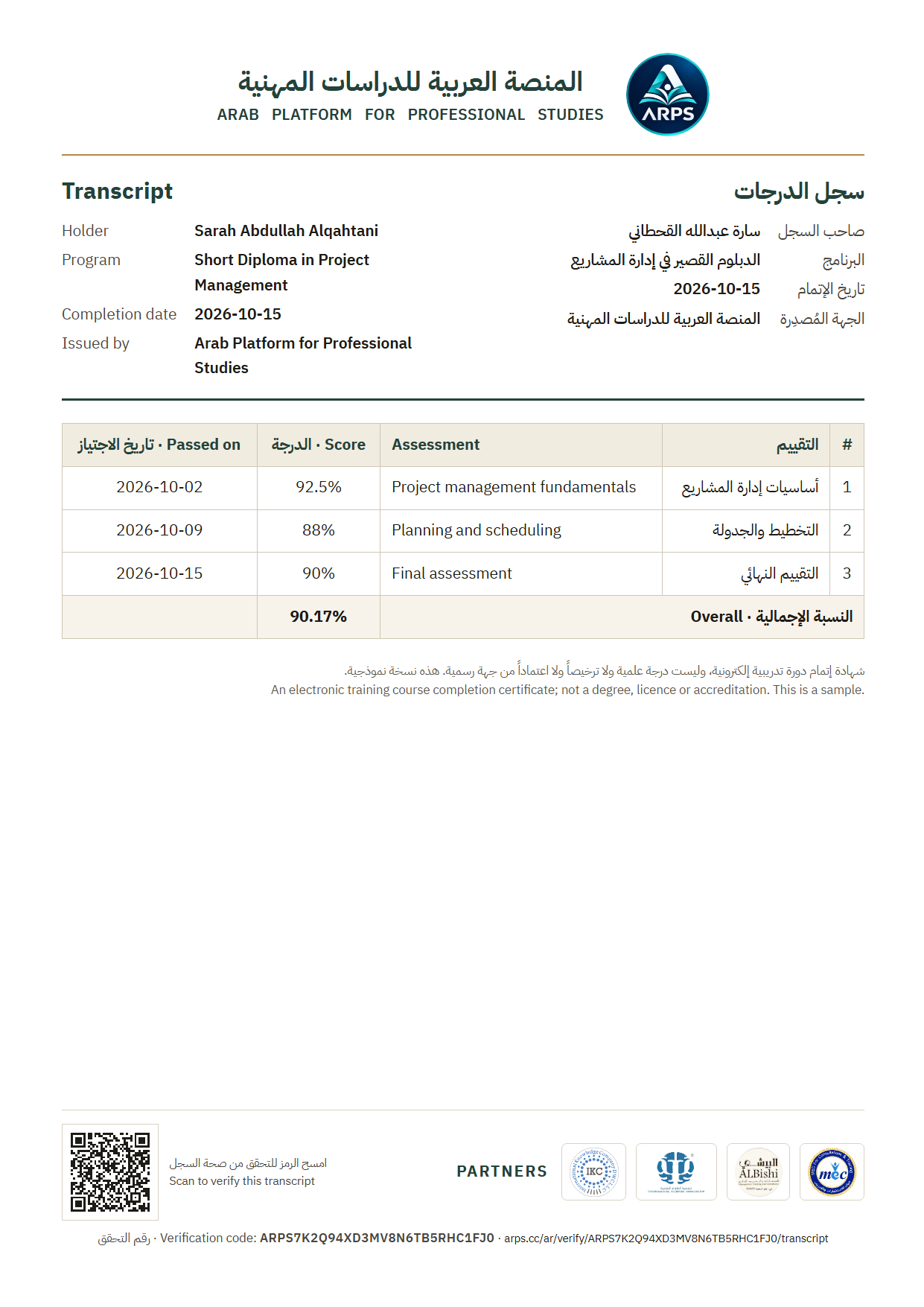
Short Diplomas are relatively comprehensive learning pathways that cover a major subject through five connected learning subjects and structured assessments, with a diploma transcript available with the credential.
Self-paced sequential study. Content unlocks progressively and each subject combines reading, examples, exercises, knowledge checks, and assessment.
Each Short Diploma contains five subjects, each with an approved assessment. A sixth final exam is not required when the five assessments adequately cover the learning outcomes.
Assessment attempts: 2 per assessment, 7 days apart
The pass mark is announced before the program is published.
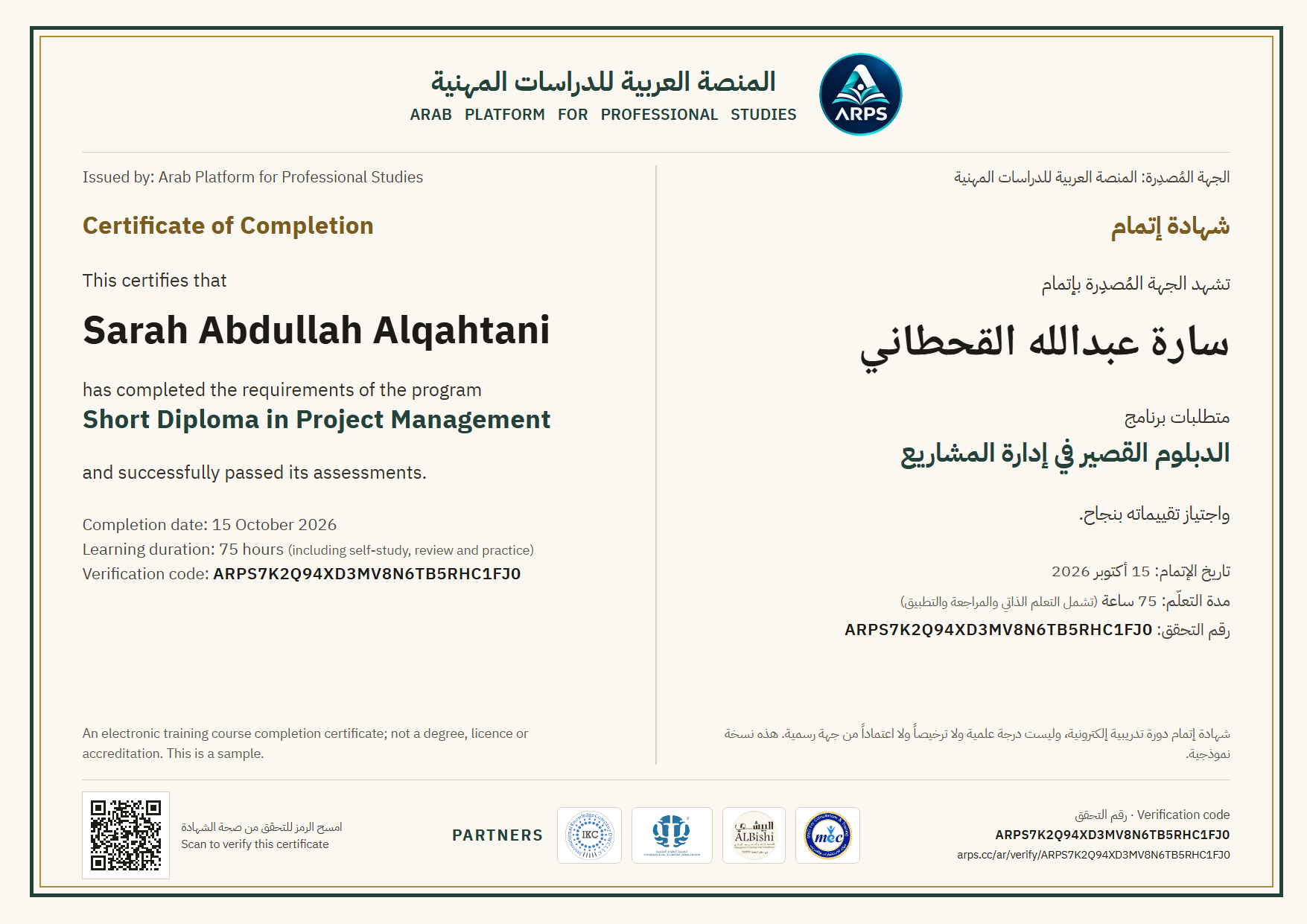
Successful completion makes the learner eligible for the Short Diploma certificate and Diploma Transcript under the credential policy.
Every certificate has a public verification code. Verify a certificate
The real design with fictional details; opens in a new window.
Verification example: a real issued certificate
Disclaimer: Educational completion certificate with subject results; not professional accreditation or a licence.
Choose it when you need to connect measurement with definition ownership, escalation, decision and communication rather than calculating defect rates alone.
No. Rules, numerators, denominators and lineage are explained with small tables; implementing them on a real system requires organizational skills and permissions.
No. Locations are fictional teaching settings; figures, organizations and decisions are invented to explain the skill.
The rule determines which records fail within a defined population. A threshold decides when a result calls for action, according to a use owner’s purpose.
Compare identifiers and values at source, after transformation and in the display; record where the gap first appears before assigning cause.
Show it with the incomplete arrival window, known denominator and use limit; do not present it as a final trend or silently omit exceptions.
Keep it unknown or quarantined according to the use owner’s decision; do not invent a default event date to improve an indicator.
A baseline, rule, conditional repair decision, impact and rollback tests, a complete comparable observation window, and a choice to retain, adjust or reverse.
No. Check population, count, rule and the link to consumer decisions; a chart can improve while valid records disappear.
Yes. Short Diploma in Data Governance and Quality is free on ARPS: every lesson, exercise and assessment is free, the first subject is open to read without an account, and the program is available in Arabic and English. Issuing a certificate is optional; it is a training completion certificate showing you passed the program's assessments, not a university degree, a professional licence or an endorsement by an external body.
The subject of this program is also known as: data governance, data quality, data management. Learners usually find it by searching for: data governance course, data quality management, data governance framework, data management course online, free data governance course.
Programs from the same field or route that may complement what you learn here.
Data, AI, Digital, IT & Cybersecurity
Develop professional judgment for a measurable enterprise data strategy and governance that operates in practice.

Data, AI, Digital, IT & Cybersecurity
An applied foundation in software testing and quality assurance, moving from requirements and evidence to case design, quality measurement and a conditional release recommendation in a fictional appointment service.

Data, AI, Digital, IT & Cybersecurity
A foundational diploma explaining how cloud computing works, from service models and global infrastructure to networking, storage, identity, reliability and cost. It stays vendor-neutral and uses AWS, Azure and Google Cloud only as illustrative examples when useful.

Data, AI, Digital, IT & Cybersecurity
A foundational diploma explaining how AI systems move from inputs and data to training, inference and evaluation, while distinguishing machine learning from generative AI and its limits. It progresses to neural networks, language models, metrics and responsible use without assuming advanced technical experience.