

Entrepreneurship, Innovation & Product
Specialist Preparation Program in Product Management
Practice product decisions from problem diagnosis to impact measurement through worked booking, invitation and file cases.
Free
Professional Mini-Master in AI Product Strategy and Management is a free program on ARPS, the Arab Platform for Professional Studies. Practice AI product strategy decisions from opportunity selection to monitored launch. Five advanced modules connect measurable opportunity framing, data and evaluation, human decision rights, product economics, staged launch and incident response.

Optional certificate fee 50% launch discount
$120 instead of $240
441 AED or 450 SAR
Five advanced modules connect measurable opportunity framing, data and evaluation, human decision rights, product economics, staged launch and incident response. Learners work through fictional cases, exercises and one integrated final.
Apply the methods to a familiar work case or to the fictional teaching cases. Exercises require no model purchase or organizational data upload.
A model score can rise while customer outcome or unit margin worsens. The program links product choices to data, error impact, operations, and accountability across a feature lifecycle.
Relevant to product management, delivery, and AI team leadership; it does not promise employment or regulated accreditation.
Begin with a user job, baseline, and non-AI alternative. Value error costs and adoption, then allocate discovery funds using falsifiable evidence.
Audit data origin, coverage, and permitted use. Compare rules, retrieval, hosted and custom models; test slices, error severity, and operating dependencies.
Allocate decision rights by impact and reversibility. Present confidence and sources honestly; design appeal, recovery, and differential-impact checks.
Calculate unit margin across adoption levels and design an experiment on customer outcome with harm guardrails. Require operational and exit evidence for release and vendors.
Stage rollout with actionable stop rules, diagnose change before intervening, command incidents with scope and remedy, and reallocate the portfolio by net value and resource constraints.
Subjects unlock in sequence as you progress.
Principles draw on scoped primary sources; case numbers and thresholds are teaching examples, not universal standards or compliance certification.
Scoped primary sources support principles; case figures and decision thresholds are fictional and confer no compliance certification.
The program assumes basic familiarity with user discovery, product metrics, comparing alternatives, and uncertainty in model output. It does not require building a model or writing code. If defining a metric denominator or reading a simple experiment is new to you, review those foundations before the advanced cases.
You first select a valuable, testable user job, then examine data, capability, and quality evidence. The third module assigns decision rights and designs experience and recovery; the fourth connects cost, experiments, and release gates. The fifth covers staged rollout, monitoring, incidents, and reallocation. One integrated final asks you to connect those decisions under common constraints.
Fictional cases with stated numbers let you frame a value hypothesis, calculate margin, compare performance slices, write a conditional release decision, and design appeal and incident paths. Each lesson includes a worked answer or review criteria. You may adapt the method to work, but studying does not require uploading customer data or confidential material to an external tool.
There is a separate practice check after every lesson with answer explanations, followed by one integrated final across all five modules. The final samples from each lesson and reports module results as parts of the same completed attempt. This content does not invent a central passing score; the approved attempt policy is applied when the program operates.
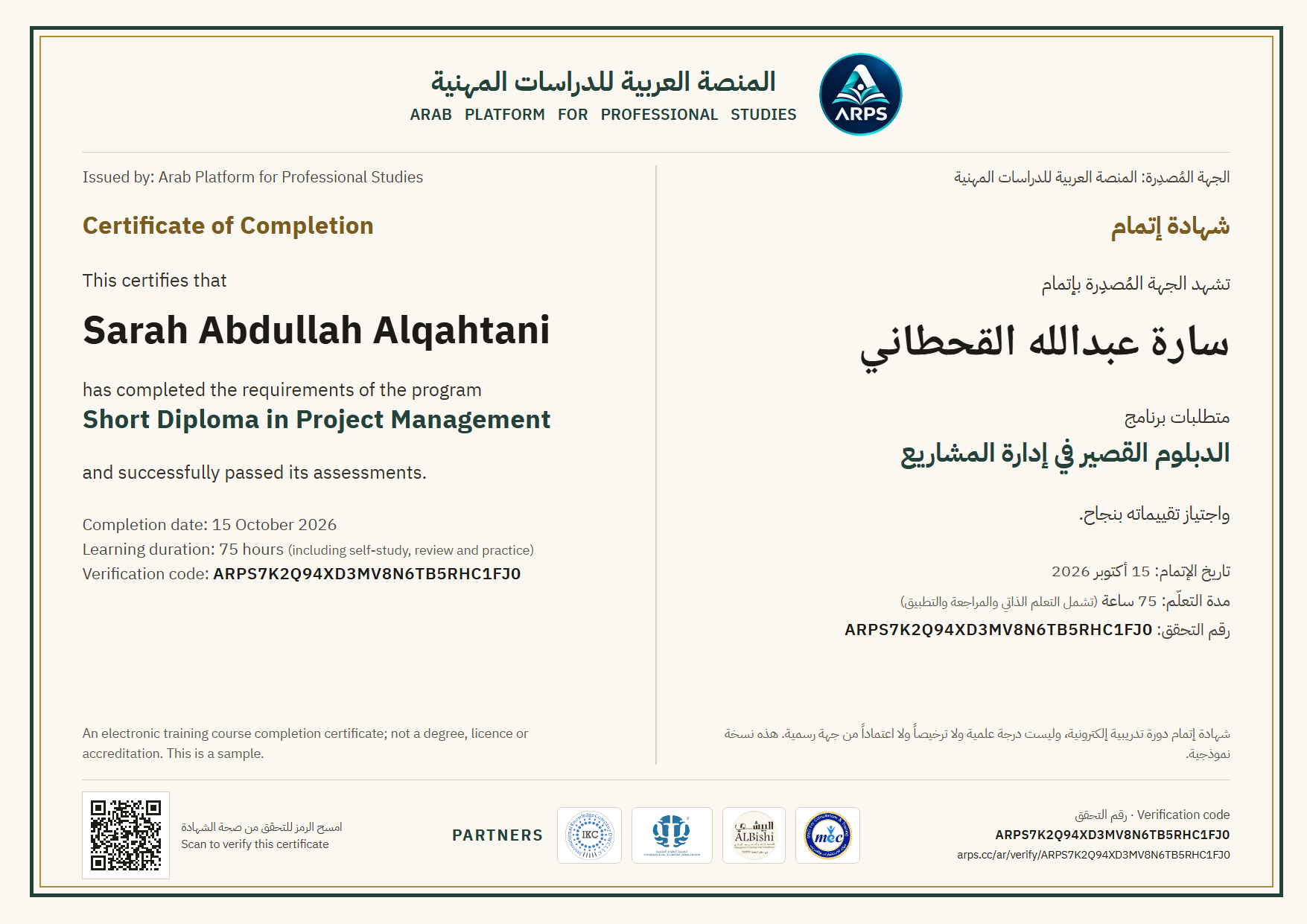
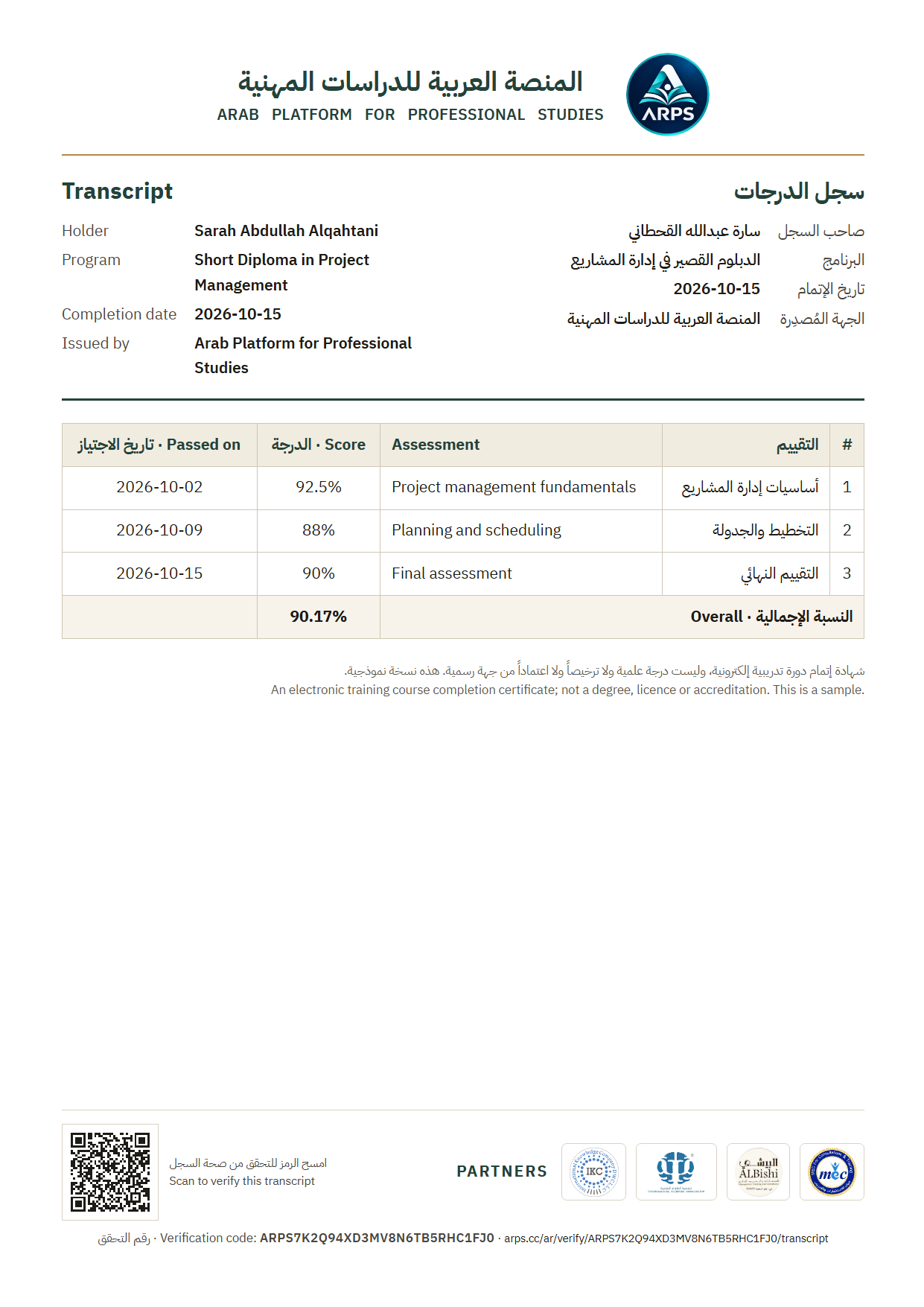
The optional credential is an internal program completion certificate under the platform policy, with a transcript of module results derived from the integrated attempt. It is not a university master’s degree, an endorsement by NIST or Google, a professional accreditation, or authority for regulated practice. Issuer and credential fees remain pending central operational settings.
No. All numerical cases are fictional and can be solved without a vendor account or organizational files. If you reflect on a real project, use de-identified descriptions within your organization’s rules; do not enter personal or confidential information into exercises or external services. Cited sources support principles, not the fictional case figures.
Yes. Professional Mini-Master in AI Product Strategy and Management is free on ARPS: every lesson, exercise and assessment is free, the first subject is open to read without an account, and the program is available in Arabic and English. Issuing a certificate is optional; it is a training completion certificate showing you passed the program's assessments, not a university degree, a professional licence or an endorsement by an external body.
The subject of this program is also known as: AI product management, AI product strategy, AI PM. Learners usually find it by searching for: AI product management course, learn AI product strategy, free program for product managers, launching and monitoring AI products, online program with completion certificate.
The real design with fictional details; opens in a new window.
Programs from the same field or route that may complement what you learn here.
Entrepreneurship, Innovation & Product
Practice product decisions from problem diagnosis to impact measurement through worked booking, invitation and file cases.

Entrepreneurship, Innovation & Product
Independent CBAP preparation across six business-analysis knowledge areas, with cases, internal assessment and a short readiness check.

Career Development, Personal Skills & Productivity
Plan a reviewable career transition using skill evidence, constraints, and application opportunities.
Entrepreneurship, Innovation & Product
Build professional judgment for technology innovation bets, from opportunity framing and evidence to a feasible portfolio, governance and rebalancing.