

Data, AI, Digital, IT & Cybersecurity
Consultant Preparation Program in Digital Transformation
A professional programme for traceable digital-transformation diagnosis, recommendation, and roadmap design.
Free
Professional Mini-Master in Digital Transformation and Modern Operating Models is a free program on ARPS, the Arab Platform for Professional Studies. Diagnose service journeys, design an operating model and transition architecture, then defend a measurable digital transformation choice. This professional mini-master treats digital transformation as a change in service outcomes and responsibility, not merely a new interface.

Optional certificate fee 50% launch discount
$120 instead of $240
441 AED or 450 SAR
This professional mini-master treats digital transformation as a change in service outcomes and responsibility, not merely a new interface. Five advanced modules move from user journey and capability diagnosis through team and decision rights, architecture, data and risk, delivery and migration, and finally benefit evaluation and an integrated roadmap. Original fictional cases have worked decisions and practice with feedback. One integrated final covers all five modules. Case assumptions and source limits are stated so classroom numbers are not presented as promises for a real service.
Apply journey, flow, capacity, data and migration exercises to a fictional case or a service you know, without submitting confidential organizational data. Every exercise asks for a decision, evidence and limits.
A technology dashboard can improve while the user's outcome stays slow or wrong because teams hand off work or policy remains unsettled. The program joins service, operations, technology and finance decisions in a route that can be tested and stopped at clear boundaries.
Relevant to service, product, operations, transformation, architecture and governance leaders. It develops judgment across disciplines without promising employment, promotion or an external professional accreditation.
Diagnose journeys, flow and capability, then formulate a testable benefits case.
Design service boundaries, teams, interfaces and decision authority across them.
Choose testable transition architecture, data accountability and resilience controls.
Deliver outcome slices while protecting current service, supplier control and cutover.
Interpret performance, benefits and incidents and defend an evidence-gated roadmap.
Subjects unlock in sequence as you progress.
Measurement, flow, cyber governance and evaluation methods draw on scoped primary sources. Fictional figures, cases and teaching thresholds are authored here and not attributed to those publishers.
Measurement, flow, cyber governance and evaluation methods draw on scoped primary sources. Fictional figures, cases and teaching thresholds are authored here and not attributed to those publishers.
No. You interpret integration, data and performance decisions, with basic professional familiarity with systems and services.
Cases and figures are fictional; general methods are linked to scoped references with limits on transfer.
Each lesson has a learning check and one integrated final covers five modules; the platform applies its central passing policy.
The route offers an internal professional mini-master completion under platform policy, not an external license or accreditation.
You can apply the questions to your work without submitting confidential information; the fictional cases suffice for practice.
The R05 route has a nominal 30-day duration and a 60-day completion window; accredited learning hours are not specified.
Yes. Professional Mini-Master in Digital Transformation and Modern Operating Models is free on ARPS: every lesson, exercise and assessment is free, the first subject is open to read without an account, and the program is available in Arabic and English. Issuing a certificate is optional; it is a training completion certificate showing you passed the program's assessments, not a university degree, a professional licence or an endorsement by an external body.
The subject of this program is also known as: digital transformation, operating model design, target operating model. Learners usually find it by searching for: digital transformation course, learn operating model design, free digital transformation program, service journey redesign, online program with completion certificate.
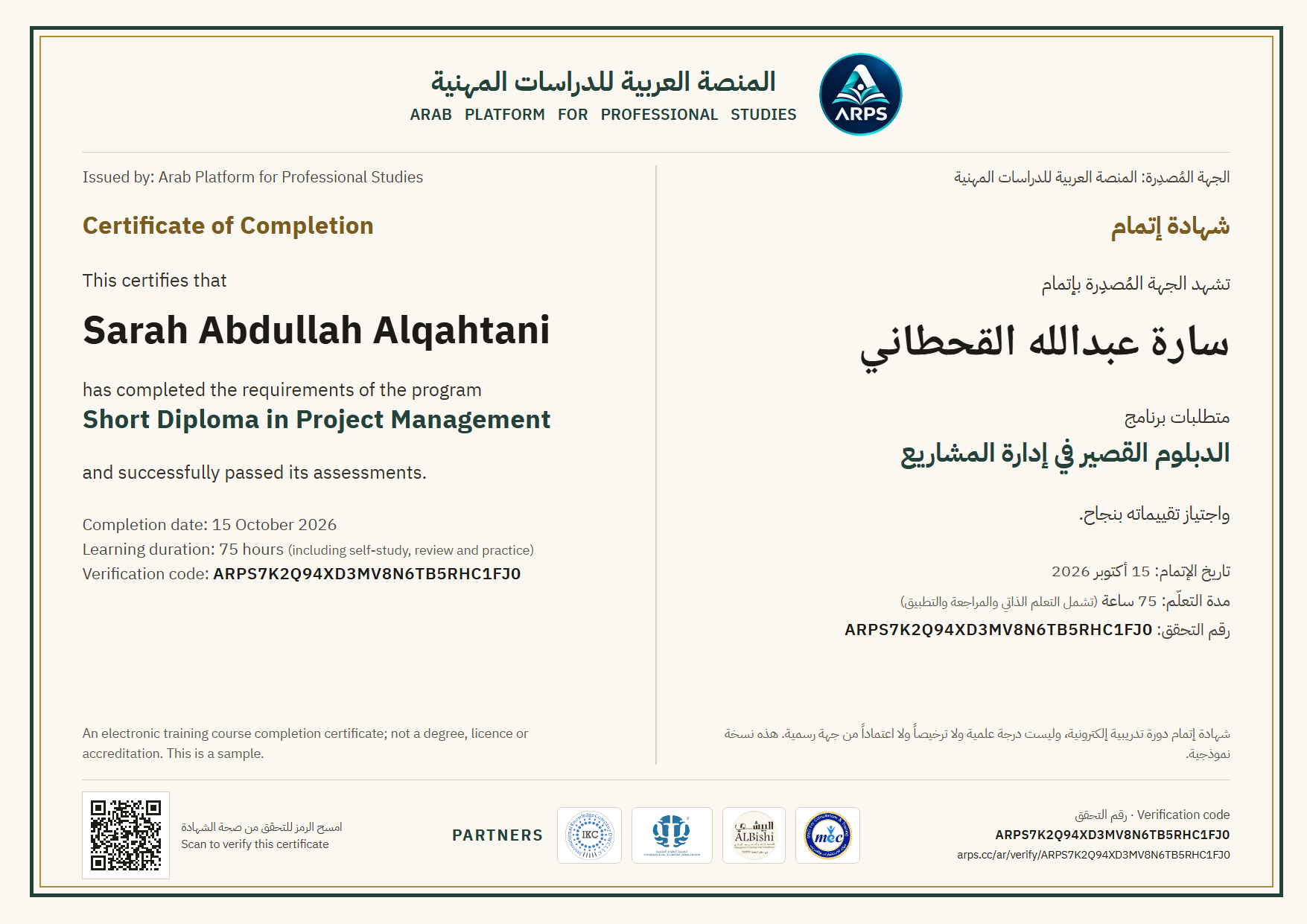
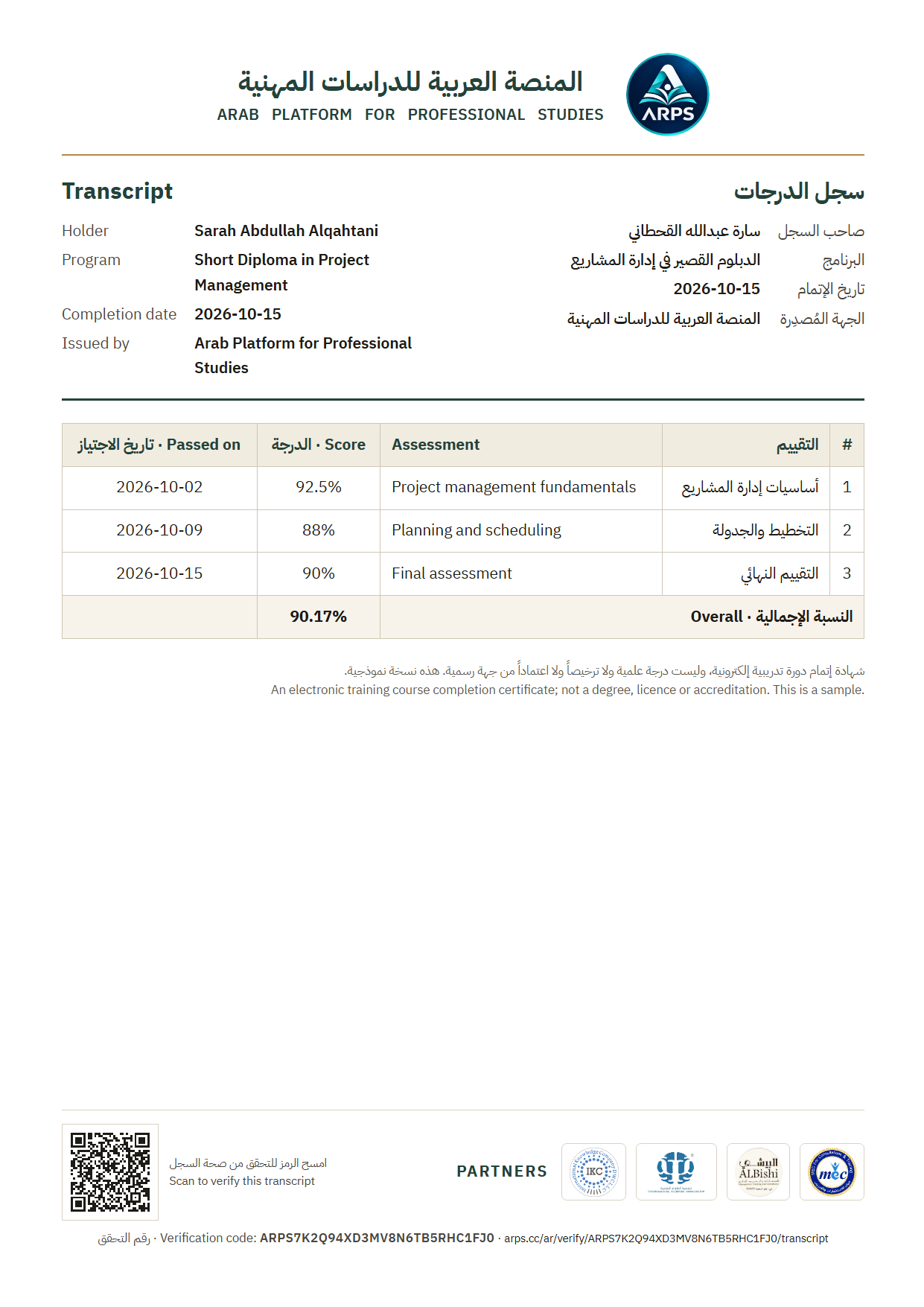
The real design with fictional details; opens in a new window.
Programs from the same field or route that may complement what you learn here.
Data, AI, Digital, IT & Cybersecurity
A professional programme for traceable digital-transformation diagnosis, recommendation, and roadmap design.

Data, AI, Digital, IT & Cybersecurity
A foundational, applied program on transforming value, processes, data, platforms, capabilities, and governance—not simply buying digital tools.
Data, AI, Digital, IT & Cybersecurity
Develop professional judgment for a measurable enterprise data strategy and governance that operates in practice.

Data, AI, Digital, IT & Cybersecurity
Design a testable cloud security and zero-trust architecture, from resource boundaries to migration decisions.