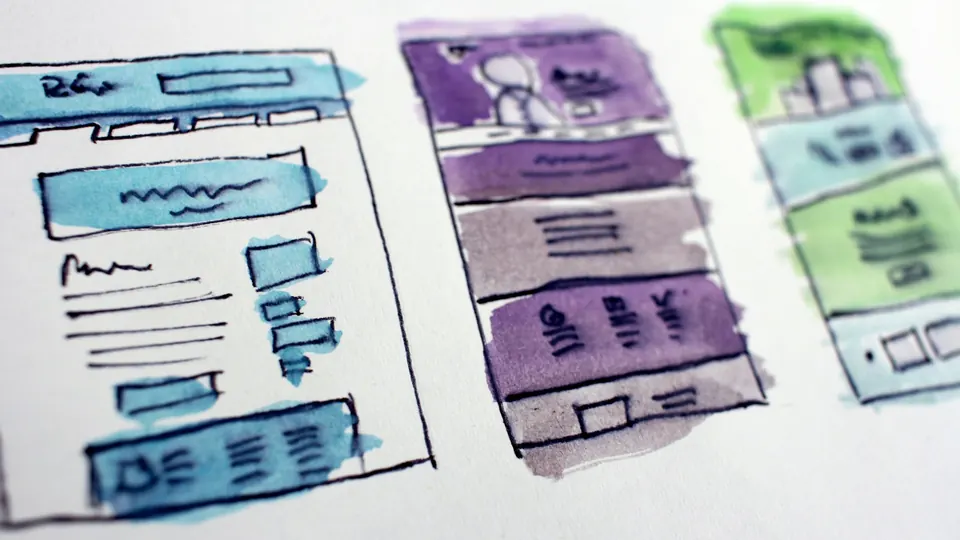
Short Diploma in Design Thinking and Service Design
Short Diploma in Design Thinking and Service Design is a free program on ARPS, the Arab Platform for Professional Studies. An applied foundation linking design thinking with service design. Start with a user's need, research it responsibly, map the journey and its backstage dependencies, compare concepts, test small prototypes and measure a bounded change with explicit limits.
Important notice: Independent completion education, not a university degree, professional licence or endorsement by cited organizations.
A person can arrive for an appointment without the right document even when the booking screen is easy to use. This programme begins with the task the person is trying to finish across the whole journey: where did information get lost and who controls the visible or backstage repair? Five subjects move from problem framing and research to journey and blueprint mapping, concept generation, prototyping and testing, then a limited operating trial and outcome measures. Lessons use fictional cases set in Arab cities for decision and calculation practice, with independent worked solutions. Their numbers are not statistics about those cities, and completion is not a professional licence or external accreditation. Learn to separate observation from interpretation, align a service promise with operational ability and pause an attractive concept when testing does not support it.
Practical relevance
Produce a problem boundary, interview plan, journey map, service blueprint, trade-off matrix, test script, indicator card and decision brief. Each tool is practised on supplied fictional data with a worked result and review criteria.
Why this program
Service improvement stalls when a familiar feature is selected before the failure is understood, or when a usable interface promises an outcome that operations cannot deliver. The diploma connects research, design, testing and measurement in one assessable learning path.
Career relevance
Useful for members of service, customer experience, product and operations teams who participate in bounded improvements. It supplies shared language for working with researchers, designers and operating owners. It does not promise a job, promotion or licensed consulting status.
What you will learn
Separate user need, symptom, assumption and solution and frame a bounded problem.
Plan interviews and observations with informed participation and minimal data.
Map a journey and a service blueprint, locating breaks between visible and backstage work.
Generate concepts with different mechanisms and compare impact, delivery ability and inclusion.
Choose prototype fidelity and run task tests without leading a participant.
Specify a limited operating trial, defensible measures and a reviewable decision brief.
Learning outcomes (20)
Separate need, symptom, assumption and solution and define service decision boundaries
Plan ethical recruitment and interviews that separate participant words from interpretation
Synthesize observations into a problem frame and test a competing explanation
Map an evidenced current journey from need to collection outcome
Link visible action to record and support work below the visibility line
Prioritize opportunities by task impact, evidence strength and trial effort
Frame open opportunities and generate concepts with distinct mechanisms
Plan representative co-design while preserving decision rights and request handoffs
Compare service concepts through desirability, delivery and inclusion assumptions
Choose prototype fidelity for comprehension or state-safety questions
Run a neutral task test and separate observation from inference
Tie a revision to evidence and retest the failure with stable denominators
Plan a bounded operating trial with owners, stop and rollback rules
Define service-outcome indicators and verify their numerators and denominators
Compose a decision brief linking research, journey, blueprint, trial and measurement
Compare access barriers across channels without inferring them from identity labels
Map who detects, owns, resolves and communicates a broken handoff
Compare concept capacity, queue and fallback under a bounded demand scenario
Separate comprehension, reach and state correctness in linked task attempts
Specify owners, review intervals, thresholds and next evidence after a trial
Who it is for
For learners seeking a foundation in design thinking and service design, and team members improving booking, registration, collection or support across channels. Examples require no advanced design training.
Also suited to operations colleagues studying how backstage steps affect a person's journey and service coordinators interpreting observations and comparing small changes with evidence. It is not preparation for a licensed occupation or external credential.
Prerequisites
No prior design course is required. You should be able to read a simple service situation, distinguish a reported fact from an opinion and organize short notes in a table. Lessons introduce needed terms and arithmetic when used.
Experience using a digital or in-person service helps but is not required. Activities use fictional cases, need no real interviews or organizational system access, and require no paid design application.
What it does not offer
Professional licensing or independent consulting authorization.
Launching a live service or conducting real research without current organizational policy and participant consent.
The first subject begins with a familiar situation: a team wants a new app because some visitors returned with missing documents. Separate a person's need from a symptom, an assumption from a solution, and mark the journey and team authority boundaries. Then plan responsible discovery that includes completers and non-completers across channels, and write interview prompts that do not plant a cause. Organize observations in a matrix that distinguishes what happened from what was inferred, testing a competing explanation before framing a problem. Fictional registration and appointment cases require explicit denominators and worked decisions. A changed fact can redirect the intervention without pretending that a small set of interviews represents everyone.
4 lessons · 10.5 hours
Frame the Service Problem Before Its Interface3 hours
Responsible Exploratory Research2.5 hours
From Observation to a Testable Problem2.5 hours
Examine Inclusion and Access Across Channels45 min
Subject 2
Map Journeys and Diagnose Service Systems
The second subject moves from describing a problem to seeing a service over time. Map a member's path from needing a book through booking and collection, recording actions, touchpoints and evidence seen. Add a blueprint that links the visible interaction to work below the visibility line: staff lists, record updates and exception handling. Fictional parcel cases show how a Ready message can precede staff's ability to hand over an item. Finally compare improvement opportunities by task impact, evidence strength and trial effort. A less frequent defect that prevents completion may deserve earlier action than a more common question resolved immediately. Neither priority scores nor one-week samples become facts about an entire population.
4 lessons · 10.5 hours
A Journey Map from the User's View2.5 hours
Blueprinting What Happens Backstage2.5 hours
Prioritize Service Opportunities2.5 hours
Design Service Exception and Recovery Paths45 min
Subject 3
Generate and Select Service Concepts
The third subject turns a clear problem into genuinely different options. Frame “How might we” questions without naming an app in advance, and generate concepts that either prevent an error or recover after it. Involve people who experience the service and those who deliver backstage work in a bounded activity, noticing absent channels, decision rights and privacy. Compare cancellation concepts for user value, operating ability, sustainability and inclusion. Applications show that understanding a cancellation message is insufficient if the appointment remains active in the schedule. State a decisive assumption and a test capable of disconfirming the preferred concept. The output is a concept portfolio, trade-off record and evidence-conditioned decision rather than a vote on the prettiest sketch.
4 lessons · 10.5 hours
Generate Distinct Solutions from a Clear Frame2.5 hours
Co-Design with Affected Parties and Decision Boundaries2.5 hours
Choose a Service Concept with Explicit Assumptions2.5 hours
Test Operational Capacity Assumptions of a Concept45 min
Subject 4
Prototype and Test Whole-Service Changes
The fourth subject matches prototypes to learning questions: a text card for confirmation meaning, a state flow for safe appointment saving and a service simulation across channels. Write a task that does not steer people to a button, and separate what they did and said from the researcher's inference. Analyze a case where selecting a time cannot count as full task completion because some participants cannot tell if it saved and some records stay old. Tie each revision to an observation, retest and stop condition, and compare before and after using stable denominators. Cases are fictional. A paper model can expose risk; it does not prove a live service safe or represent every user.
4 lessons · 10.5 hours
Prototype Fidelity to Match the Hypothesis2.5 hours
Test the Service Task Without Leading2.5 hours
Revise the Service and Retest the Risk2.5 hours
Interpret Small-Test Evidence Without Overclaiming45 min
Subject 5
Implement, Measure and Sustain a Service
The fifth subject brings research and design into a reviewable operating decision. Plan a bounded trial with an office, channel, period, owners, event record and rollback when a Ready message precedes a backstage list. Define indicators using user outcomes, numerators, denominators and time periods. Correct a measure when an audit shows bookings and visits no longer describe the same set. The final brief links user problem, journey, blueprint, options, trial and measurement. Do not add interviews, calls and visits without case linkage. Say what held, what remains unknown and how priority changes if an arrival problem appears after record sequencing is repaired.
4 lessons · 10.5 hours
A Bounded Operating Trial Before Expansion2.5 hours
Measures That Reflect Service Outcomes2.5 hours
Integrate Research, Operations and Measurement2.5 hours
Set Decision Cadence and Improvement Triggers45 min
Subjects unlock in sequence as you progress.
Strengths
Five subjects, each with a summative assessment and bilingual worked applications.
One learning path joins need, research, blueprint, prototype and trial decision.
Fictional cases show denominators, results and inference limits instead of market claims.
Consistent attention to both interface use and backstage delivery.
Evidence basis
Core methods draw on the Design Council framework, IDEO.org tools, government service and research guidance, and Nielsen Norman Group blueprinting guidance; each source has a stated scope and verification date.
Reference organizations
Design Council
IDEO.org
Government Digital Service
Nielsen Norman Group
Frameworks used
Double Diamond / Framework for Innovation — current public framework page
Methodology
The programme links need research to journey and blueprint mapping, prototyping, trials and measurement, while stating source and denominator limits.
How the route works
Short Diplomas are relatively comprehensive learning pathways that cover a major subject through five connected learning subjects and structured assessments, with a diploma transcript available with the credential.
Self-paced sequential study. Content unlocks progressively and each subject combines reading, examples, exercises, knowledge checks, and assessment.
Build integrated knowledge in a major subject.
Study through five clear, connected learning subjects.
Complete a defined assessment for each subject.
Receive a diploma transcript showing subjects and results when the credential is issued.
Assessment
Each Short Diploma contains five subjects, each with an approved assessment. A sixth final exam is not required when the five assessments adequately cover the learning outcomes.
Assessment attempts: 2 per assessment, 7 days apart
The pass mark is announced before the program is published.
Certificate
Successful completion makes the learner eligible for the Short Diploma certificate and Diploma Transcript under the credential policy.
Disclaimer: Educational completion, not a university degree or professional licence.
Program questions
Do I need prior design experience?
No. The diploma introduces core tools progressively, while expecting you to read cases and complete applications rather than only watch definitions.
Will I work with real service users during study?
No. Activities use fictional data. Real workplace research requires participant consent and the organization's current rules.
Does completion authorize professional service design practice?
No. It records internal educational completion and is not a licence or external endorsement.
How are subjects assessed?
Each subject has a summative assessment, and subject results appear in the completion transcript under route policy.
How long is the study, and are its hours official?
The current authored workload is about 960 minutes. The nominal study period is 30 days, with access up to 60 days under route policy. Official hours await central calibration.
Is Short Diploma in Design Thinking and Service Design free, and do I get a certificate?
Yes. Short Diploma in Design Thinking and Service Design is free on ARPS: every lesson, exercise and assessment is free, the first subject is open to read without an account, and the program is available in Arabic and English. Issuing a certificate is optional; it is a training completion certificate showing you passed the program's assessments, not a university degree, a professional licence or an endorsement by an external body.
What other names is Short Diploma in Design Thinking and Service Design known by?
The subject of this program is also known as: design thinking, service design, human-centered design, service blueprinting. Learners usually find it by searching for: design thinking course free, design thinking process, design thinking steps, service design blueprint, service design definition.
Learn to diagnose ambiguous service problems, compare design options and write evidence-based advisory recommendations with clear limits, from research through testing and monitoring.
A foundational diploma on moving from product problems and users to value, strategy, priorities and roadmaps, then collaborating on delivery and launch, measuring outcomes and learning through experiments after release.
A five-subject foundational diploma that connects e-commerce business models and store experience with payments, fulfillment, measurement, retention, privacy and risk, using simple applications and calculations without assuming a specific platform or country.
A short diploma connecting user research to interaction design and usability testing. Frame a bounded problem, collect traceable evidence, design an accessible task flow, then test decisions and hand off recommendations with explicit evidence limits.